How to reward your kids the right way
In an age of materialism and instant gratification, it can be tricky knowing how to reward our children appropriately for a job well done. How do we reward them for tidying their rooms effectively or performing well at a particular task? There are a few ways in which you can reward your child and build their self-esteem.
Develop your child’s internal locus of control
Naturally, we would love our children to do something well purely for the satisfaction that it brings them in doing so. This is what we, as parents, aim for eventually and is called developing the child’s internal locus of control – in other words, doing something from within because the result feels good. If we build our children’s internal locus of control, they will be more motivated to succeed as they will attribute their success to their own efforts and abilities.
However, we all know that to eventually inculcate an internal locus of control in our children, it starts with an external locus of control – in other words, children doing things for rewards.
Also read: Encouraging your child to succeed – The do’s and don’ts

Praise specific behaviours
The most basic form of reward starts early and is one that is easily forgotten, and that is praise. When we praise our children for doing something well, it motivates them to continue trying in that area. There are different forms of recognition, but the most effective is those that describe the behaviour that we want to see the child doing more of, for example:
- “I love how you started doing your homework without me asking you to.”
- “I love how you put away all your Lego blocks.”
One of the best ways to shape a child’s negative behaviour is by ‘catching them being good’ and then commenting on it as the child starts to try harder to gain more of that positive feedback. Praising the child’s efforts and not the result is an essential part of praising – as again, this motivates children to try harder.
"Praising the child’s efforts and not the result is an essential part of praising."
Avoid arbitrary praise
It is crucial that we don’t just praise willy-nilly, for instance, just telling our children that they are pretty, talented, smart, etc. as that can create a subconscious pressure always to be that way and to become scared of failure if not achieving on that level. That is why praise that describes specific behaviours is so much healthier and more motivating and gives them the positive concept of someone who always tries and, in that way, achieves results. We want our children to learn that rewards are not something that just happens but require some form of input and effort to gain them.
Also read: Don’t tell your kids they are smart!
Reward desirable behaviour
The aim for the parent is to mould a desirable behaviour; the aim for the child is to get something they want, so everybody wins when we reward desirable behaviour. There are several ways in which to do this, including:
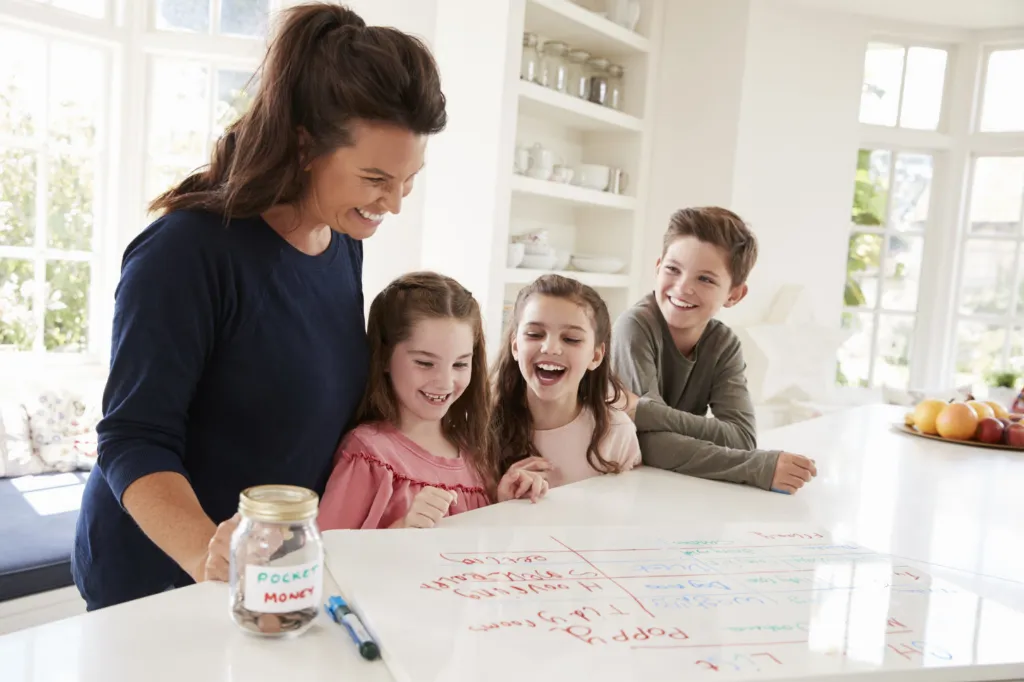
- Star charts are an age-old form of giving rewards as the child must do something consistently to achieve the reward. For younger children, star charts should not go on for longer than five days before the child gets the reward they are working towards, as it can be difficult to sustain the effort. When children are given stars, tokens, or stickers to get to the final goal, it motivates them to continue working towards the goal.

- Contingency rewarding is also helpful such as the child being allowed to gain or do something when they have done something we require. For instance: “Mom, can I go on my iPad now?” “As soon as your homework is done, you can use the iPad with pleasure.” Quid pro quo rewarding like this is just a shortened form of star charts and teaches children to prioritise by first doing what must be done before doing what they would like to do. This starts to prepare them for the higher grades where there is often far more work and more things to fit in.
- Extra time on various activities is an easy, useful way to reward our children. Sometimes it can be challenging to think of rewards for our children but giving them extra time in addition to what they may be allowed per day doing something they love like soccer, technology, or screen time is a good incentive. Again, this can work in a quid pro quo way of motivating them to push a little harder to get a little more of what they want.
Decide on appropriate rewards
The most important thing is to know your child’s currency as that gives you leverage as the parent. Rewarding them with things they already have free access to is not motivating but rewarding them with something they really want is a useful form of motivation.
If they hate marshmallows, promising them marshmallows when they have finished the task is useless, so make sure you know what your child loves but be rational. You are not promising a trip to Disney Land for tidying up their room or finishing their homework successfully. However, after successive efforts at doing their homework effectively, they may earn a trip to get ice cream or go to see a movie.
Rewards must be appropriate and attuned to your child’s desires, for example:
- Screen time, special activities or outings are ideal for younger children
- Airtime or data might be more appropriate for older children

Simple rewards can also include:
- Getting their favourite treat in their lunch box
- Choosing their favourite dinner
- Choosing a movie to watch with the family
- Going somewhere with mom or dad, e.g. the war museum, a skateboard park, taking the dogs for a walk, etc.
The rewards listed above are all easy, healthy rewards. The important lesson is that they are working to gain something worthwhile.
Also read: Cool ways to beat summer boredom
Eventually, our children will move to an internal locus of control where they want to achieve. Where seeing the fruits of their efforts and feeling the satisfaction that comes from that is more than good enough. Until then, we need to be creative in our efforts, always keeping in mind what goal we want to achieve in rewarding them.


